Mayo Salt Barns being restocked ahead of winter with 1,000km of roads to treat
By Jack Good · The Mayo News · 25 September 2026
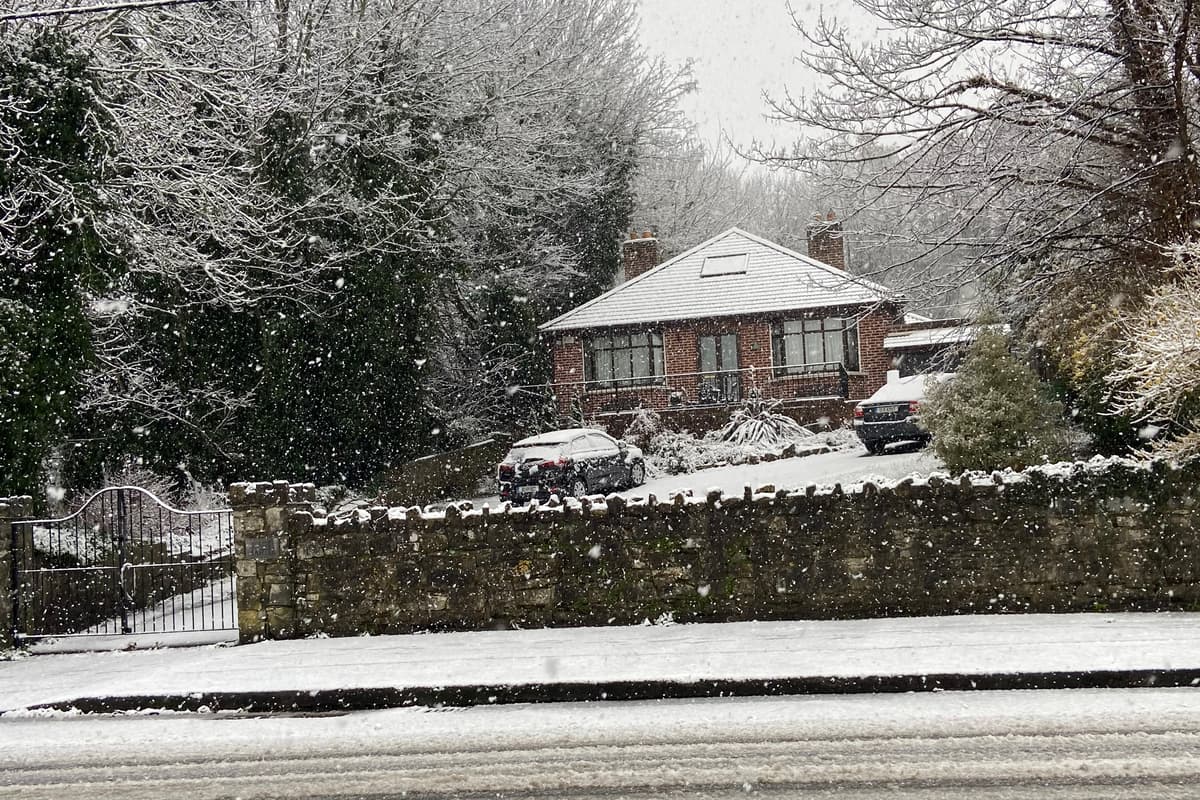
Realism called for as not every road can be gritted despite 21 gritting routes, new brine trucks and a bigger salt buffer
By Jack Good Published 25th Sep 2026, 15:00 BST Snow covered house | Mayo News Realism called for as not every road can be gritted despite 21 gritting routes, new brine trucks and a bigger salt buffer Mayo County Council is preparing for the winter season with more than 1,000 kilometres of roads to treat across 21 gritting routes, a stronger salt reserve than in the past, and a fleet upgraded with two new brine trucks.
The plan was presented to councillors by Peter McLoughlin, Senior Engineer with Mayo County Council. Even with the sun shining, he said, the council has to start thinking about salt stocks at this time of year.
Sign up to our Mayo Live newsletter Sign up Thank you for signing up! Did you know you can manage your profile, and explore all of the available newsletters from Mayo Live within your account.
Salt is ordered through a web-based reporting and ordering system, and engineering management requires updates on a weekly basis during the season. Storage capacity is currently around 2,500 tons, but demand can far exceed that. Use has reached as much as 7,600 tons in a single season in recent years.
The council's storage position changed after the "Big Freeze" of 2010, when Mayo ran out of salt. Transport Infrastructure Ireland (TII) subsequently funded four salt barns, which gave the council a buffer for future events. Mr McLoughlin said the shortage has not happened since. The trend now is to fill the barns before Christmas to maximise storage.
In a severe, prolonged spell, stockpiles of grit could also be left out around the county for public use, particularly at pinch points such as hills and junctions.
Roads are divided into three priority levels. Priority One covers national primary and secondary roads, and Priority Two covers strategically important regional and local roads. Both receive routine treatment. Priority Three routes, including footpaths, cycleways and other local roads, are treated only if resources allow.
Decisions depend on the severity of the weather and on available resources, including compliance with the Working Time Act. "We have to make sure the drivers and operators get appropriate rest," Mr McLoughlin said.
The council would normally mobilise its gritters about 70 times a year. More than 60 staff are involved, including drivers, foremen, controllers, duty engineers, caretakers and craft workers, working with trucks, pickups, tractors and loading shovels.
Two new dedicated brine trucks were added two years ago. Mr McLoughlin said brine, which is salt water, sticks to the road, whereas traditional dry salt can bounce and roll off, making brine "much more effective".
Winter maintenance spending has ranged from approximately €950,000 to more than €1.4 million in recent years, which Mr McLoughlin described as considerable expenditure.
Cllr Damien Ryan praised the drivers and operators, calling their work an "heroic effort" given that they often travel on untreated roads. He said it was important to keep the issue on the council's agenda every year.
He argued that the main constraint is staffing rather than the cost of salt. "It's impossible to treat every road in the country, and we know that," he said, adding that the council has to be practical and realistic, and that a set programme gives the public certainty.
Cllr Ryan's one request was that smaller gritters be kept in proper mechanical order and ready to assist in towns, villages and around schools when conditions become extreme, even if only for a few days. Cllr Annie May Reape agreed, calling smaller machines for small villages "crucial".
Cllr Reape also raised a problem from last winter, when roads gritted early in the morning froze over again within an hour during several severe nights.
Mr McLoughlin acknowledged this had happened. He cautioned that when Met Éireann advises care on routes that are not gritted, it can give the impression that gritted routes are safe. That is not necessarily so, he said, because salt can wash off in a heavy shower and the road can freeze again, even if a gritter passed only 15 minutes earlier.
Reporting by Jack Good for The Mayo News , funded by the Local Democracy Reporting Scheme. Republished by News Room under the scheme’s reuse permission.
About News Room →