Kilrush 50 years after worrying RTÉ report: From ’deprived town’ to a town of opportunity - Clare Echo
By Paige Foley · The Clare Echo · 27 August 2026
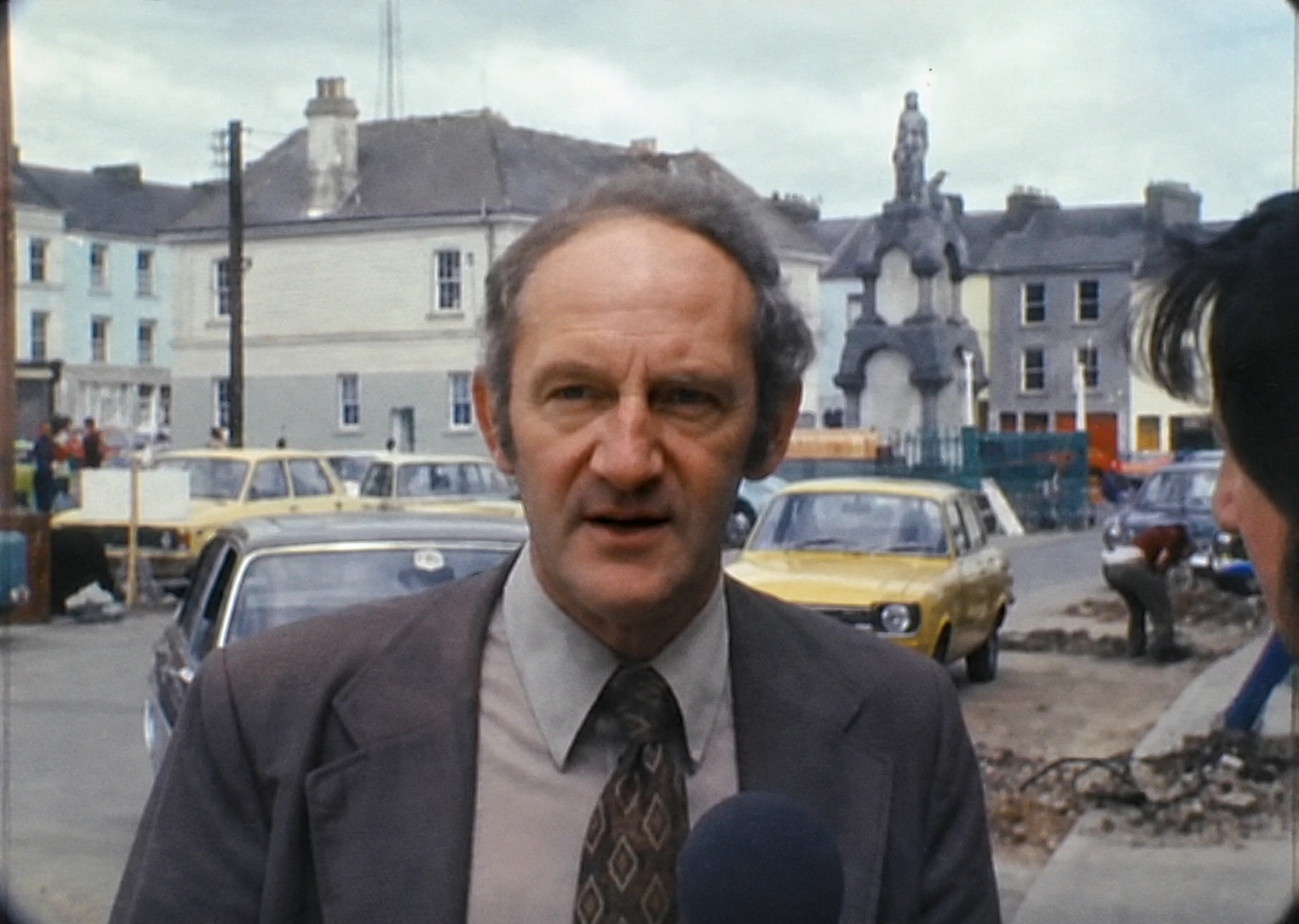
*Jack Fennell, then chairman of Kilrush Urban Council || Credit: RTE Archives, Economic Disaster Zone, 1976 FIFTY years after an RTÉ report described Kilrush as a “dying town”, many of the challenges highlighted in the programme remain familiar, although the town now has greater opportunities and assets to build on. An RTÉ News report broadcast on August 3, 1976, … Kilrush 50 years after worrying RTÉ report: From ‘deprived town’ to a town of opportunity Read More »
*Jack Fennell, then chairman of Kilrush Urban Council || Credit: RTE Archives, Economic Disaster Zone, 1976
FIFTY years after an RTÉ report described Kilrush as a “dying town”, many of the challenges highlighted in the programme remain familiar, although the town now has greater opportunities and assets to build on.
An RTÉ News report broadcast on August 3, 1976, examined the challenges facing the West Clare town, focusing on population decline, unemployment, factory closures and the loss of activity at Kilrush docks.
Reporter Tom MacSweeney said the town had been described as “the most denuded and probably the most deprived in Ireland” according to statistics from the Economic and Social Research Institute, which showed that Kilrush had lost 20% of its population since 1926.
The report said the local unemployment exchange was paying out around £17,000 a week in unemployment benefits, while factories had closed and there was a “great sense of lethargy” in the town.
Jack Fennell, then chairman of Kilrush Urban Council, told the programme : “Put bluntly, Kilrush is a dying town and most of its 3,000 people would agree.”
The report highlighted the decline of Kilrush docks, which had once been a major employer.
Mr MacSweeney said the number of boats using the port had fallen from 48 to around six, while the town’s traditional industries employed around 400 people between them.
With more than 100 young people leaving school each year, the report said there was little prospect of a previous forecast of the town reaching a population of 6,000 by 1980 being achieved.
Mr Fennell said the town had appeared to be “on the up and up” until the recession led to factory closures and rising unemployment.
He said the port had gone several months without a ship, compared with 35 to 40 ships a year two years previously.
This trend continued in the years that followed, with Glynn’s Mills and Celtic Ceramics among the local factories to close during the 1980s.
Despite this, he identified the Shannon Estuary as Kilrush’s “main hope of development”.
Construction of Moneypoint Power Station began in 1979, just three years after the RTÉ report, with the station later becoming a major employer and economic driver for the area.
Almost 50 years later, West Clare Fianna Fáil councillor Rita McInerney said many of the issues highlighted in the report still resonated.
“What struck me most watching the report was how familiar some of the issues discussed in 1976 still sound today,” she said.
“The concerns around population decline, young people leaving, employment opportunities, connectivity and making better use of the Shannon Estuary are themes that, in different forms, we are still discussing.
“The difference is that I believe Kilrush today has far greater opportunities and assets to build on.”
Cllr McInerney said Kilrush had changed enormously since 1976, with the decline of traditional industries and changes to retail and services altering its economic landscape.
However, she said the town had also developed as a tourism destination through its harbour , marina, Vandeleur Walled Garden, its position on the Wild Atlantic Way and its role as a gateway to the Shannon Estuary.
She also highlighted the progress of the West Clare Railway Greenway from Kilrush to Kilkee.
The Shannon Estuary remains a central part of the town’s future, she said, although the potential now looks very different to that identified in 1976.
“I believe offshore wind must now be a Government priority for the West Coast,” Cllr McInerney said.
“The Shannon Estuary and the wider West Coast have an enormous opportunity to become a major hub for renewable energy, green industry and marine-related employment.”
She said progress was needed on the West Coast Designated Marine Area Plan (DMAP) so the benefits of future development could reach communities such as Kilrush .
“We cannot allow the opportunity presented by offshore wind to drift for another generation,” she said.
“If Government is serious about balanced regional development, then the West Coast needs to be at the heart of Ireland’s offshore renewable energy strategy, and Kilrush needs to be positioned to benefit from the jobs, investment, training and enterprise that can flow from it.”
The theme of community-led action also runs through both accounts of Kilrush .
The 1976 programme highlighted the construction of a £55,000 community centre by local people, describing it as one of the town’s few positive developments.
Fr Pat Sexton said the centre was one of the most important achievements in Kilrush in recent years and provided services for children, older people and other members of the community.
“We need government help and a lot of expertise and a lot of encouragement and motivation as well as coming together to do and take the first steps ourselves,” he said.
Cllr McInerney similarly said community and voluntary organisations remained one of Kilrush’s greatest strengths, highlighting groups including Kilrush Tidy Towns, Kilrush GAA, Kilrush Rugby Club, Kilrush Comhaltas, the West Clare Family Resource Centre and LCETB.
She said economic regeneration and community development needed to go hand in hand.
More recently, Cllr McInerney said the Kilrush Town Centre First Plan had provided a community-led vision for the regeneration of the town centre , while the proposed redevelopment of the Mars Cinema site could act as a catalyst for wider regeneration.
She said the biggest challenge now was ensuring that economic opportunities translated into population growth, employment and a sustainable community.
“ Kilrush needs to be positioned to benefit directly through investment in housing, roads, water and wastewater infrastructure, broadband, public transport, tourism and town- centre regeneration,” she said.
Looking ahead to the next 50 years, Cllr McInerney said she wanted Kilrush to become a thriving coastal town and the natural gateway to the Shannon Estuary, with a growing population, strong local businesses, quality employment and a revitalised town centre .
The RTÉ report, she said, was a reminder that communities could not continue hearing the same promises every generation.
“What we need now is for Government to match that local ambition with national investment and action,” she said.
“If we get that right, perhaps when someone looks back at Kilrush in another 50 years, they will see 2026 as the beginning of a new chapter for the town.”
Prefer to pay monthly? Click the monthly option and get the first six months for just €3 a month (less than 75c per week), and thereafter €8 per month.
Cancel anytime, limited time offer. T&Cs Apply. www.clareecho.ie.
Reporting by Paige Foley for The Clare Echo, funded by the Local Democracy Reporting Scheme. Republished by News Room under the scheme’s reuse permission.
About News Room →