How lack of capacity and funding paused Disability Pride in Ireland
By Alannah Murray · GCN (Gay Community News) · 17 September 2026
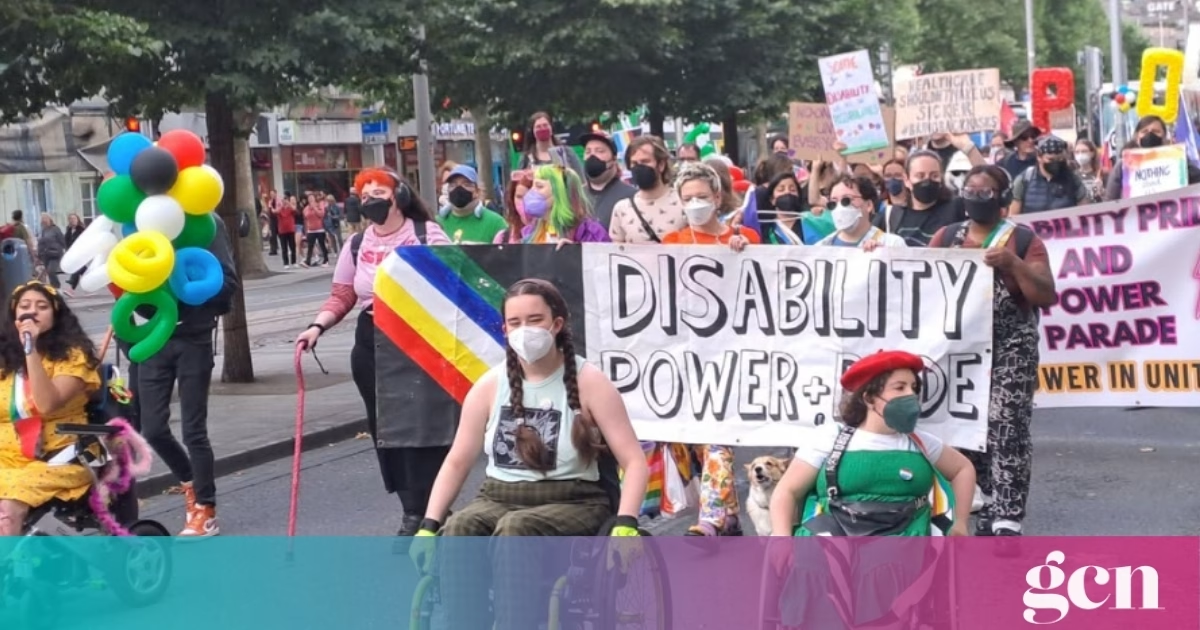
In 2025, Disability Power Ireland shared that it would be taking a break to gather resources and capacity in order to return in July 2027.
Community 17 September, 2026 . Written by Alannah Uí Geargáin .
This article is part of GCN’s new Amach le Bród (Out with Pride) series, to combat anti-LGBTQ+ misinformation and platform underrepresented voices. The project was funded by the Coimisiún na Meán News Reporting Scheme .
Change is hard. It’s slowly won and quickly lost. Building a movement takes immeasurable resources, both financial and personal. Disability Power Ireland grew from mounting frustrations that disabled people were not being listened to and were instead portrayed as objects of pity. Disabled not by their conditions, but by an inaccessible society refusing to make space for them.
Maryam Madani, along with a small coalition of disabled people, had had enough. Disability Power Ireland was the definition of grassroots and took a simple idea and tried to build around it: that disability isn’t something that you should be ashamed of.
In 2022, they launched the Disability Pride and Power Festival . It was an ambitious, hybrid program which spanned topics such as the United Nations Convention on the Rights of Persons with Disabilities (UNCRPD), disabled joy, comedy, and international collaborative panels with both the US and UK. However, it relied mostly on disabled people working for free: both organisers and performers.
In 2023, the program was similarly ambitious but a bit more tailored, with partnerships including Leitrim County Council, The Undercurrent Collective and Mud Island Community Gardens amongst others. It also featured a theme, and a call to action: Disabled People Can’t Wait.
The inaugural march attracted national media attention, with several hundred attendees listening to speeches and rally cries for the community to come together. Disabled advocacy is often fractured, with several groups fighting for the same funding and overlapping access requirements, often in direct conflict with each other. It was a joyous occasion.
However, behind the scenes, organisers were feeling the strain. They had no resources, were trying to juggle their own health issues and the realities of disabled life and lacked external support.
Despite a welcome injection of support from the Arts Council, 2024 was the last time Disabled Power Ireland had a Pride program. Despite their rapid growth, it was unsustainable without the capacity to keep it moving. But they vowed to return.
I spoke to founder Maryam Madani about her vision for Disability Power Ireland, what led to the breakdown, and why we desperately need Disability Pride.
On the founding principles of Disability Power Ireland, Madani said that her vision was one of solidarity and community.
“I wanted to create a celebratory space for us to come together in communal joy and affirmation that we are perfect just as we are; to counteract with joy the messages we are constantly bombarded with which claim otherwise.”
On the importance of community, Madani said, “It is amazing to see how, even in something as simple as our community WhatsApp group, so much vitality and support happens, because disabled people understand what each other is going through better than anyone and have learned how to navigate the system and guide each other through these barriers”.
It hasn’t been easy though. Madani herself said that she is not the same person she was when she formed the idea for Disability Power Ireland, admitting that it came at great personal cost. Shouldering the pressure and workload for the organisation led to what Madani describes as intense burnout and complete health collapse.
She also touched on the fact that organisations like Disability Power Ireland are stuck in a constant limbo of capacity and funding.
“We are in a Catch-22 with low capacity and funding – inability to acquire the funding necessary to expand capacity, and low capacity to acquire funding.”
According to Article 29 of the UNCRPD, disabled people have a right to organise and represent themselves at international, national and local levels. This is known as a Disabled Persons Organisation, or DPO. The government has a positive obligation to support DPOs under their obligations as signatories of the UNCRPD.
Progress on this, however, has been slow. Only certain DPOs have seen widespread support, leaving many grassroots organisations fighting amongst themselves for various grants.
The government recently announced the Power to Participate fund, aimed at improving DPO engagement to the tune of €750,000. However, all is not what it seems.
To qualify for funding, you have to have strong governance structures, and your organisation must have its own bank account. Strand A funding to put some of these structures in place is capped at €7,500.
Organisations also need a tax number or registered charity number. This, Madani says, makes it so established large-scale DPOs are more likely to succeed than their grassroots counterparts.
Madani says a cap on available funding for unincorporated groups is a major barrier. For Disability Power Ireland and other grassroots groups, she says the fund cap of €7,500 is “hardly enough to significantly grow the capacity of grassroots DPOs to be able to engage with policymaking and submissions, never mind enough to put on a national festival of this scale”.
Currently, they are partnering with international cosmetics group Lush. Their Access All Areas soap is Disability Power Ireland’s first large-scale partnership, with 75% of profits from the sale going directly to the organisation.
Speaking about the partnership, Madani says that Lush “understands the important work being done on the ground despite little to no funding”.
Disability related hate crimes are on the rise, becoming part of the national hate crime figures for the first time in 2025. With 38 reported incidents, it is clear that the disabled community deserves a space where they can both advocate for better and celebrate themselves; it just needs the appropriate support.
This support, according to Madani, should come not from the disabled community alone but from other businesses and organisations with the resources to give. This is like the operation of traditional LGBTQ+ Pride parades. There is a massive overlap between our communities , with many disabled people also identifying under the LGBTQ+ umbrella. We owe it to our disabled comrades to show up for them, as they have shown up for us.
For further information on how you can support Disability Power Ireland, partner with them or getting in touch, please email [email protected] .
Alannah Uí Geargáin (she/they) is a trainee barrister and disability advocate living in Dublin, Ireland. Her work has spanned over 10 years of advocacy, and they have advocated on queer issues, reproductive healthcare and other important causes.
GCN is a free, vital resource for Ireland’s LGBTQ+ community since 1988.
GCN is a trading name of National LGBT Federation CLG, a registered charity - Charity Number: 20034580 .
GCN relies on the generous support of the community and allies to sustain the crucial work that we do. Producing GCN is costly, and, in an industry which has been hugely impacted by rising costs, we need your support to help sustain and grow this vital resource.
Supporting GCN for as little as €1.99 per month will help us continue our work as Ireland’s free, independent LGBTQ+ media.
If you are enjoying GCN, how about sign up for free to access all articles? You can also log in from here if you already have an account.
How lack of capacity and funding paused Disability Pride in Ireland
Reporting by Alannah Murray for GCN (Gay Community News) , funded by the News Reporting Scheme. Republished by News Room under the scheme’s reuse permission.
About News Room →