Rural Ireland Thinks: 67% back Government plans to loosen one-off housing rules
By Alex Cunningham · Irish Examiner · 17 September 2026
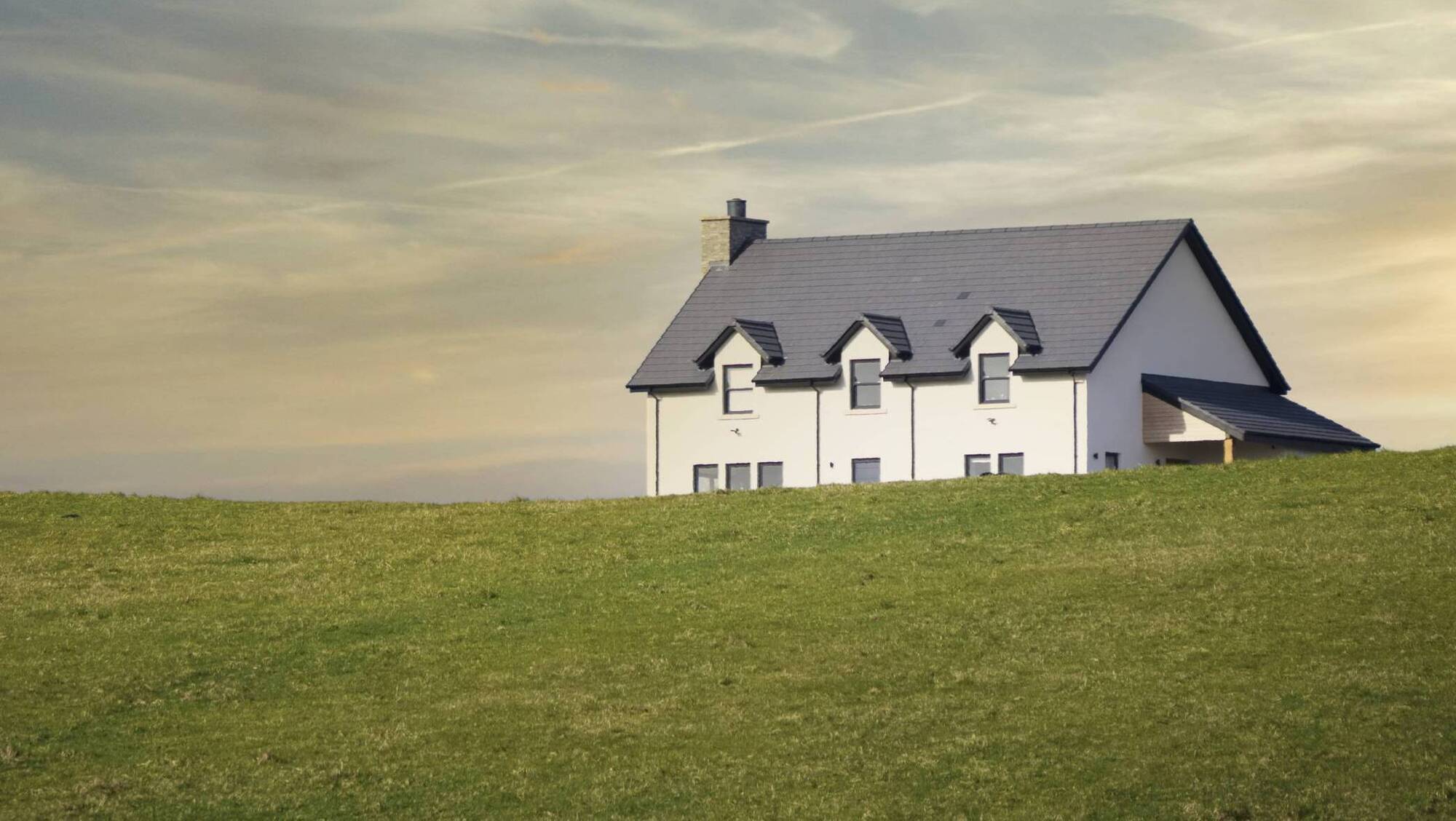
Poll shows strong rural support for one-off housing reforms, despite concerns over infrastructure, sprawl and Ireland’s housing shortfall
The changes could impact the roughly 109,000 people living in rural Ireland who are connected to the farming industry, according to the poll. Picture: iStock
The majority of adults living in rural Ireland welcome the Government’s moves to loosen restrictions on one-off housing , with 67% strongly supporting the policy.
The findings in the Irish Examiner/Ipsos B&A Rural Ireland Thinks poll represent a rare win for the Department of Housing, although 47% of respondents believe the Government has no handle on the housing crisis.
The reforms were popular across all age demographics, with 90% approval among those aged 65+ and 82% among those aged 16-24.
The changes could impact the roughly 109,000 people living in rural Ireland who are connected to the farming industry, according to the poll.
Speaking to the Irish Examiner , housing minister James Browne framed the loosening of regulations as “a social decision.”
“I think they're common-sense kind of changes, and they're about empowering people to live in their own local communities… It's about simplification, standardisation, and that in turn reduces costs,” Mr Browne said.
Current regulations requiring prospective developers of one-off homes to demonstrate an economic and social need are set to be relaxed under the new legislation.
Read More Rural Ireland Thinks: Women in rural Ireland more likely to feel disadvantaged than men Rural Ireland Thinks: Majority think Government has neglected rural pubs and way of life Rural Ireland Thinks: Just over half of people in rural Ireland consider themselves religious
Mr Browne’s junior minister, John Cummins, said the poll results meant the Department of Housing was “on the right track”.
Others have criticised the rule changes as overtly “populist”, citing concerns that increased rural sprawl would stretch costly infrastructure such as roads, ambulance services and school buses.
Lorcan Sirr, a lecturer in housing policy at TU Dublin, said the wider costs would likely be borne by taxpayers.
“Housing in the countryside may be more affordable for individual households, but the broader costs of one-off housing are always borne by society,” he said.
Brendan O’Sullivan, chartered planner and UCC lecturer said the moves could lead to a “bungalow blitz” across rural Ireland and represented a divergence from the department’s stated goal of sustainable and compact development.
“When it comes to this issue, they have completely abandoned it,” he said.
Mr Browne said the “ship has sailed” on arguments against rural sprawl, saying Ireland was unique in having experienced rural sprawl for hundreds of years.
“We are a strongly rural country and I think that should be protected, and there's something unique about it that's worth protecting. It is part of our heritage,” he said.
Mr O’Sullivan, who previously worked as a planner for local authorities, questioned whether there was a genuine “Eircode lottery” and estimated that around 80% of one-off housing applications were permitted nationwide.
Mr Cummins said there was no need for a “big review” to identify inconsistencies in the planning system.
“There has been a divergence of approach from local authority to local authority over a considerable period of time…rural housing guidelines go back 20 years,” he said.
“There's been many development plans in all counties over that period of time, and the rules have been applied in different ways by different local authorities, and that's very clear to see.”
Mr O’Sullivan also questioned whether increased rural sprawl could affect the development of onshore wind farms, given the growing focus on energy security. Current legislation requires onshore wind turbines to be at least 500 metres from residential properties.
According to BCE Consulting Engineers, Cork County Council recorded the highest number of successful one-off housing approvals, with 3,182 developments granted between 2021 and 2025.
The changes are unlikely to significantly reduce Ireland’s housing shortfall.
“I think you will see numbers going up, but it was never a kind of a planned approach of well ‘could we get X amount of extra houses by doing this?’” Mr Browne said.
“This was very much for me, coming as a rural TD, a rights-based approach and a cost-based approach, and whatever extra houses we get, that will be fine.”
Reporting by Alex Cunningham for Irish Examiner, funded by the News Reporting Scheme. Republished by News Room under the scheme’s reuse permission.
About News Room →