Forgotten Polish hero of Great Irish Famine remembered in Donegal - Donegal Daily
By Mark Forker · Donegal Daily · 5 October 2026
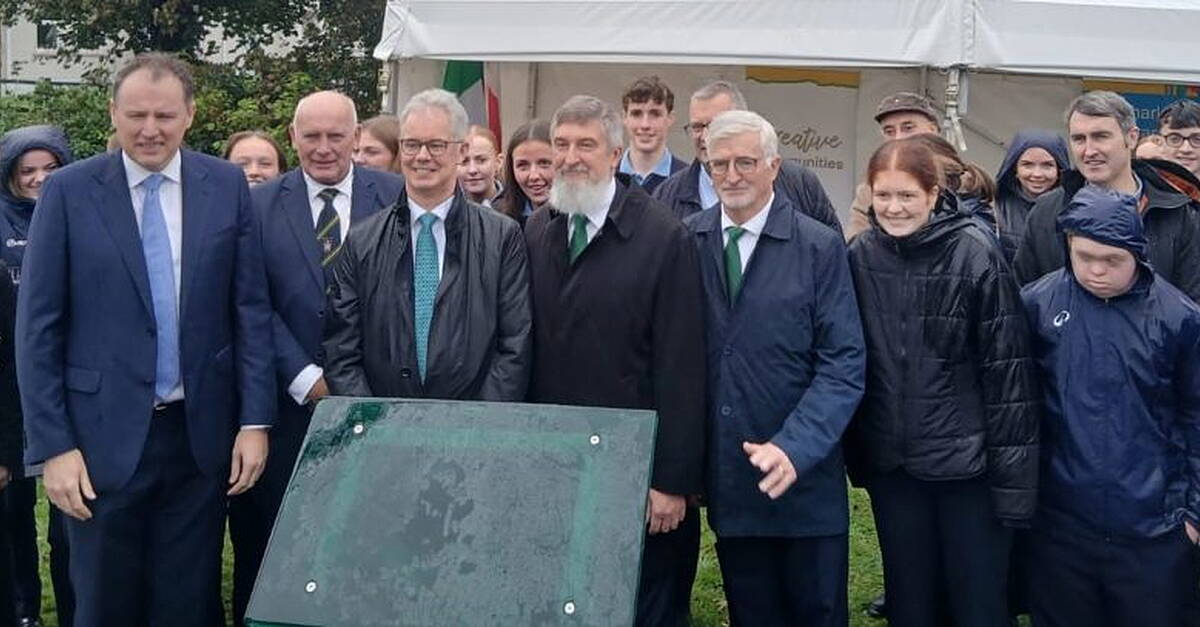
A special plaque and exhibition has been unveiled celebrating the life of a forgotten Polish hero who saved thousands during the Great Famine.
A Polish humanitarian credited with saving the lives of thousands of children across Donegal has been remembered in a poignant ceremony in Glenties.
A special plaque celebrating the contribution of Paul Strzelecki during the Great Irish Famine was unveiled on Monday, in a ceremony attended by a host of Polish and Irish dignitaries.
Charlie McConalogue, Minister of State at the Department of Culture, Communications and Sport, Jonathan Conlon, Ambassador of Ireland to the Republic of Poland, and Artur Michalski, Chargé d’affaires of the Republic of Poland to Ireland were among those present this morning.
What became evident at the event was that Paul Strzelecki was a bright light during what was Ireland's darkest ever period.
Prior to the announcement of this unveiling, very little was known about the phenomenal contribution made by the Polish humanitarian and explorer.
The aim of the new plaque and exhibition that has been unveiled in Glenties Comprehensive School, is to spread awareness of the role Strzelecki played in saving an estimated 7,000 children in Donegal and 200,000 across the country.
Minister Charlie McConalogue admitted he had never heard of Paul Strzelecki until this project was launched, but he paid tribute to the huge contribution he made during the Great Irish Famine.
"He was a very interesting character, who had a very fascinating life, and he made a significant impact during the Great Irish Famine. He explored the world at a time when that was not an easy thing to do, but his relationship with Ireland began when he returned to London.
"In 1847, he began raising funds for the Irish famine, and through that fundraising activity a huge amount of that capital was diverted into communities across Donegal, Sligo and Mayo. He provided food aid directly through the schools system. That ensured that not only could children avail of education, but also guaranteed that they would be fed by attending school," said McConalogue.
McConalogue stressed that his impact across the North-West was profound, and said it was important to acknowledge the contribution that he made.
"It's appropriate to mark what Paul Strzelecki did for Donegal and beyond, and it's important to highlight how someone who was a Polish citizen made such a huge contribution to the North-West of Ireland during what was one of our darkest periods in history."
Ireland has the Presidency of the EU until the end of December, and part of that obligation sees each county in Ireland paired with an EU state.
This groundbreaking project was born out of Donegal being paired with Poland.
"Poland has been a great combination for Donegal. We have many people born in Poland now living and working in Donegal, and they are contributing very positively to our economy, society, and culture," said McConalogue.
McConalogue's comments were echoed by Jonathan Conlan, Ambassador of Ireland to the Republic of Poland.
Conlan revealed that Strzelecki came to Westport in 1847, with funds that would be worth €41m now.
"He collected donations from the public in the UK and beyond, and in today's currency it would be in and around €41 million. He had the great idea, which was very innovative at the time, even though it seems obvious today, and that was to feed children in schools. The relief was used to provide nutritious food to children based primarily in Donegal, Sligo, and Mayo.
"Fundamentally, that's why we're here today to mark this man's life, and the work he did across the North-West. The school here in Glenties was the site of the poorhouse during the Great Famine, and the location of the plaque is symbolic for that reason," said Conlon.
Paul (Pawel) Strzelecki was a world-renowned Polish explorer and scientist that was born in 1797 in Poznan.
He left Poland in 1829 and travelled to England, and in 1834, he embarked on a world tour that lasted almost 10 years.
During that decade of globe trotting, Strzelecki visited the United States, Canada, West Indies, South America and Mexico.
He then headed across the Pacific to New Zealand and Australia.
Strzelecki volunteered for unpaid relief work in Ireland during the Great Famine.
He arrived in Ireland on January 20, 1847, and he was tasked with the responsibility of helping the impoverished western counties of Donegal, Mayo and Sligo.
In a letter to the B.R.A. (British Relief Association) he wrote, "No pen can describe the distress by which I am surrounded. It has actually reached such a degree of lamentable extremes, that it becomes above the power of exaggeration and misrepresentation."
His decision, which was unheard of at the time, to directly provide food for all schools in the aforementioned counties saved thousands of lives.
In a time when division is being sewn into the public discourse over immigration and those seeking refuge across Ireland, the story of Paul Strzelecki is a timely reminder that regardless of where you're from, you should always try to help those in need.
Reporting by Mark Forker for Donegal Daily, funded by the Local Democracy Reporting Scheme. Republished by News Room under the scheme’s reuse permission.
About News Room →